


On most average adult male frames, a 22-inch chain finishes just below the collarbone, roughly level with the second shirt button. That is why it has become the default men's length: long enough to sit visibly over a crewneck tee, short enough to disappear under an open collar without swinging around. When shopping for a mens 14k gold chain 22-inch, the length question, in other words, is the easy part — and it can be settled in about a minute with a piece of string.
What actually derails purchases is everything a product listing leaves out. Whether the links are solid or hollow. How many grams of metal you are getting. Whether the closure is a lobster clasp or a spring ring. And, most consequentially, whether "14k gold" describes the entire chain or just a microscopic coating over a base metal. This roundup works through those decisions in order, then groups real chain options by how you intend to wear them — including where gold-tone stainless steel is the smarter buy and where only solid gold will do.
Where a 22-inch chain actually falls — and who it suits
Twenty-two inches is the middle rung of the standard men's ladder (18, 20, 22, 24). It reads as deliberate rather than dramatic, which is why stylists tend to treat it as the safe starting point for a first chain. Shorter 18–20 inch lengths can feel tight or oddly formal on a larger neck, while 24 inches and beyond starts to create a longer drop that suits streetwear-leaning looks more than a boardroom.
The string test takes 60 seconds
Cut a length of string or a phone charging cable to 22 inches, close it into a loop, and drape it around your neck in front of a mirror. Note where the lowest point lands relative to your shirt buttons. Do this while wearing the neckline you wear most — a crewneck and an open button-down produce very different verdicts. If the loop sits where you want the chain to sit, you are done. If it rides higher than expected, you likely have a broader neck or chest and should audition 24 inches.
Add a pendant and the geometry changes
A pendant does not hang from the bottom of the loop — it hangs below it. A tall pendant, a dog tag, or a bail-heavy moissanite drop can add a meaningful amount of visual length, pushing the focal point further down the chest. This is exactly why 22 inches is the length jewelers most often recommend to pendant wearers: a shorter chain crowds the base of the throat once a pendant is added, while 22 inches leaves room for the piece to frame the chest properly. If your pendant is unusually tall, subtract that height mentally from your string test before committing.
When to size up or down
Slimmer frames can wear 22 inches without the chain looking oversized, and it will typically sit a touch lower on them than on a broader wearer. Men with wider necks or heavier builds sometimes find 22 inches sits higher than the photos suggested and prefer 24 inches, particularly with a bulkier link. If you plan to layer two chains, a 20-inch and a 22-inch pair separates cleanly; two 22-inch chains will tangle and overlap.
What 14k gold actually buys you
Karat notation describes purity, not quality. Pure gold is 24k; 14k is 14 parts gold to 10 parts alloy metals such as copper, silver and zinc, which works out to roughly 58.5 percent gold. That is why 14k pieces are stamped either 14K or 585. The alloy content is not a compromise so much as the point: it makes the metal harder and more resistant to stretching and deformation than higher-karat gold, which matters enormously for a chain made of dozens of small links rubbing against each other all day.
| Karat | Approx. gold content | Common stamp | What it means for a chain |
|---|---|---|---|
| 10k | 41.7% | 10K / 417 | Very hard and more affordable; slightly paler color; higher alloy content can bother sensitive skin. |
| 14k | 58.5% | 14K / 585 | The everyday standard for men's chains — recognizably rich color with good resistance to daily wear. |
| 18k | 75% | 18K / 750 | Deeper, warmer hue but noticeably softer; scratches and stretches more readily under daily stress. |
| 24k | ~99.9% | 24K / 999 | Nearly pure and very soft; rarely used for chains meant to be worn every day. |
If you are weighing the higher-purity route, our breakdown of a solid 18k gold chain covers where the extra gold content is worth the trade-off in softness.
Solid, hollow, gold-filled, vermeil or plated?
These four words separate very different products that often share the same search results:
- Solid 14k gold: the same alloy all the way through. Scratch it and the color underneath is identical. It can be polished, resized and repaired without exposing anything else.
- Hollow 14k gold: genuine 14k, but the links are tubes rather than solid bars. Used to keep heavy-looking styles wearable and less expensive. The catch is impact damage — a hollow link that gets crushed or kinked is difficult to restore.
- Gold-filled: a thick layer of gold mechanically bonded to a base-metal core, usually brass. More robust than plating, but deep wear can eventually reach the core.
- Vermeil: sterling silver with a comparatively thick gold layer. A precious-metal core at a lower cost than solid gold.
- Gold-tone / gold-plated stainless steel: a gold-colored coating over a steel core. Modern PVD coatings on quality steel are highly scratch- and tarnish-resistant, but the piece carries no intrinsic gold value and is not solid gold in any technical sense.
The tell is usually in the wording. "Solid 14k gold" and a stated karat stamp mean one thing; "gold-tone," "gold-colored," "PVD-coated," or "14k gold plating over stainless steel" mean the karat figure applies only to the surface. Neither is dishonest — buying the wrong one because the listing was vague is what causes regret.
Hallmarks: what to look for and where
On a legitimate solid gold chain, the stamp is typically on the clasp or on a tag attached to the link nearest the clasp. Expect 14K or 585, often alongside a maker's mark. A hallmark is not an unbreakable guarantee against counterfeits, but its complete absence on a piece sold as solid gold is a reason to ask questions before paying. Reputable sellers will tell you exactly where the stamp is and show it in a close-up photo.
Thickness is the spec that decides how the chain reads
Two 22-inch chains in the same style and same karat can look nothing alike. Millimeter width, not length, controls visual presence — and it is the single spec most often skimmed over. A useful mental reference: a standard phone charging cable is roughly 3mm thick.
| Approx. width | How it reads at 22 inches | Best for |
|---|---|---|
| 1.5–2.0 mm | Minimal and subtle; more noticeable up close than across a room. | Discreet daily wear, layering, small pendants. |
| 2.1–3.0 mm | Balanced — clearly visible without dominating. | The default all-rounder, worn solo or with a medium pendant. |
| 3.1–4.0 mm | Bold but still wearable every day; becomes the accessory. | Statement solo wear, larger pendants. |
| 4.1 mm and up | Strong presence with a luxury or streetwear read. | Showpiece wear, or the anchor chain in a stack. |
Weight matters alongside width. In solid gold, gram weight is what you are actually paying for, and it is the reason two chains of identical length and stated width can sit in very different price brackets. If a listing publishes a gram weight, treat that as a quality signal in itself; if it does not, ask.
The 22-inch styles worth shortlisting
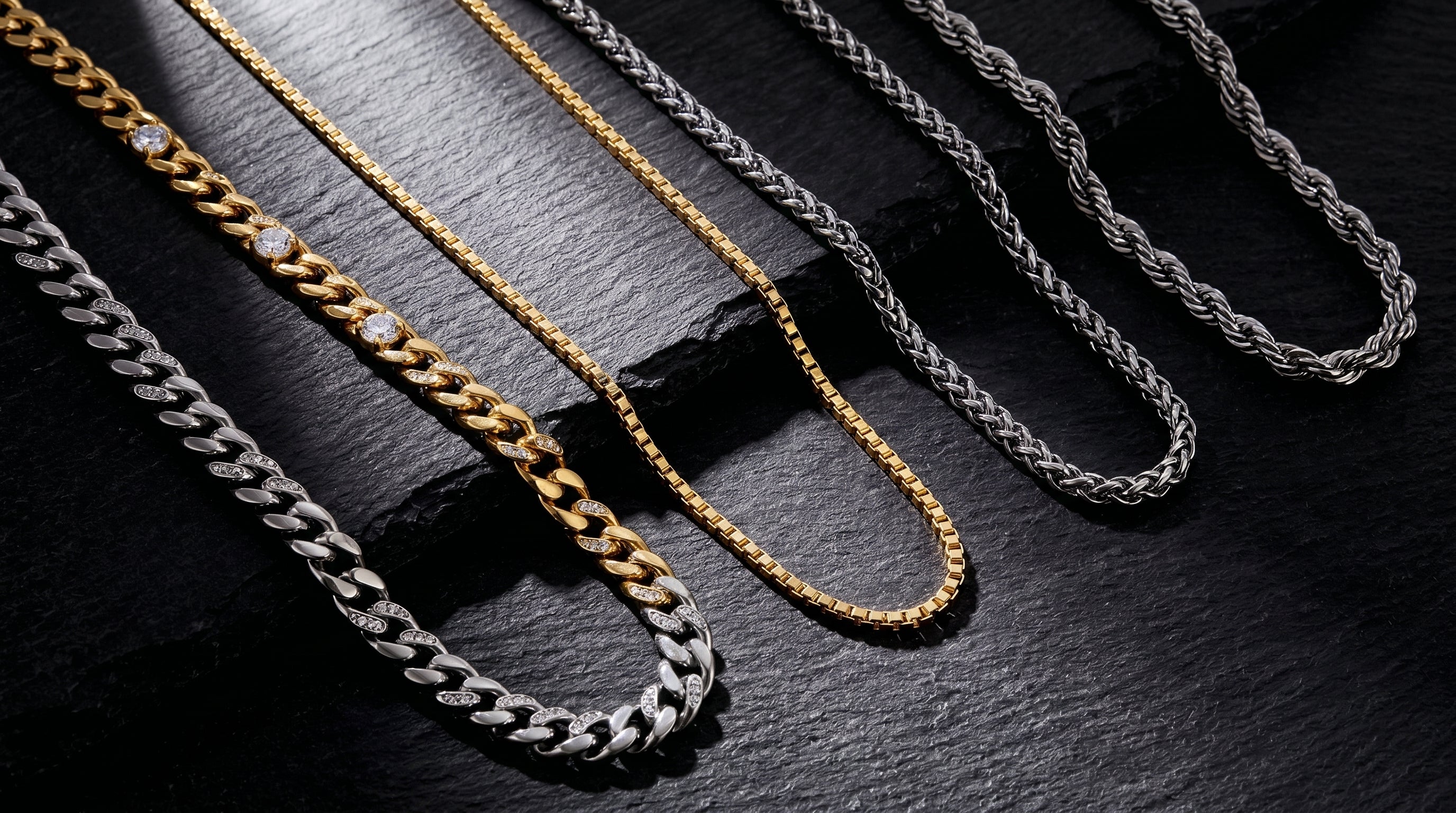
Style dictates both the look and the failure risk. Here is how the main men's link families behave at 22 inches, with Awareness Avenue chains that show each silhouette. Note the material called out in each product name — several of these are gold-tone stainless steel rather than solid gold, and length options are listed on each product page, so confirm 22 inches is selectable before checkout.
Cuban and curb
Flattened, interlocking links that lie flat against the chest. Cuban is the thicker, more rounded variation of the curb family, and it is the most recognizable men's chain silhouette there is. Because the links are broad and interlock securely, it handles daily wear well — in solid gold, ask specifically whether the construction is solid or hollow, since heavier Cuban widths are frequently made hollow to stay comfortable. For the look in gold-tone steel, the Everyday Armor Cuban Chain and The Avenue Cuban Chain both sit in the assertive-but-wearable 4mm territory.
Rope
Twisted strands that catch light from multiple angles, which makes rope the sparkliest of the classic men's styles — useful if you want presence without extra width. The caveat: rope chains made too thin can be fragile, so this is a style where erring slightly thicker pays off. The Golden Rope Chain at 4mm makes the bolder statement, while the Legacy Rope Chain at 2.5mm stays in everyday territory. If a solid gold rope is what you are after, our guide to the 14k solid gold rope chain in 22 inch, 4mm goes deeper on that exact configuration.
Box and square link
Clean geometric cubes joined in a straight line. Box chains read as minimalist and modern, they hang very straight, and their square profile makes them a tidy carrier for pendants. See the Boxed In Chain and the Square Dance Chain for the silhouette; check each product page for its stated material and dimensions.
Wheat and fine link
Wheat chains braid strands into a dense, textured rope-like plait that stays flexible and drapes smoothly. At around 3mm it hits the balanced middle of the width table above — the Gilded Wheat Chain shows the effect. For something deliberately understated, a 2mm link such as the Connell Chain stays quiet under an open collar.
Statement widths
Past roughly 8mm you are no longer wearing a chain, you are wearing the outfit's focal point. In solid 14k gold that width carries serious gram weight; in gold-tone steel you get the visual scale without the same weight around your neck. The Emperor Chain at 12mm is the extreme end of that spectrum. Flat styles like herringbone and serpentine belong in a separate caution category — they look superb but kink permanently if bent, so they are poor candidates for a never-take-it-off chain.
Solid 14k gold or gold-tone stainless steel?
This is a lifestyle decision more than a budget one. Be honest about how the chain will live.
| Solid 14k gold | Gold-tone stainless steel | |
|---|---|---|
| Intrinsic metal value | Yes — roughly 58.5% gold by weight | None; value is in design and construction |
| Scratch behavior | Scratches show but the color underneath is identical; can be polished | Steel core is highly scratch-resistant; the coating is the wear point |
| Tarnish | Highly resistant | Quality PVD coatings resist tarnish well |
| Repairability | Solderable, refinishable, resizable by a jeweler | Generally replace rather than repair |
| Risk tolerance | Losing or damaging it is a financial event | Low-stakes; suits gyms, worksites, travel |
| Best for | Everyday urban wear, heirloom intent, gifting a lasting piece | High-activity wear, trying a new width or style before committing |
A practical approach many wearers land on: a solid 14k chain for daily and social wear, and a gold-tone steel chain in a similar width for the gym, the beach, and anywhere a snag is likely. If you are still narrowing down purity and style, our broader guide to choosing a 14k gold chain for men compares the options side by side.
Quick picks by wearer
- First chain, no idea where to start: a 2–3mm box or wheat link at 22 inches. Visible, versatile, hard to over-wear.
- You already own a subtle chain and want presence: 4mm Cuban or rope.
- You never take jewelry off: a robust interlocking style in steel, or a solid gold curb — avoid flat herringbone.
- Buying it to carry a pendant: 2–3mm, plain link, 22 inches, lobster clasp.
- You want a showpiece: 8mm and up, worn solo against a plain neckline.
You can browse the full range of widths and links in the men's jewelry collection, or head straight to solid gold pieces and fine jewelry when only real gold will do.
The four checks to run before you pay
1. The clasp
Clasps and the rings attaching them are the most common failure point on a men's chain, and they are the part buyers scrutinize least. A lobster clasp is the safer choice over a simple spring ring: the mechanism is more secure and far easier to operate with larger fingers. Look for a soldered (closed) ring where the clasp meets the chain rather than an open jump ring that can splay under tension. On any chain above about 4mm, the clasp should look proportionate to the links, not like an afterthought bolted onto the end.
2. Solid or hollow, in writing
If a listing describes a wide solid gold chain but never says the word "solid," assume nothing. Hollow construction is a legitimate engineering choice for heavy styles, but you should know which one you are buying, because it changes both the price per inch and how the chain survives an accidental impact.
3. Stated gram weight and millimeter width
Length alone tells you almost nothing about how a chain will look. Width plus weight tells you nearly everything. Between two chains of the same style and karat, the heavier one is the more substantial piece — and "heavier than I expected" is consistently one of the most positive reactions buyers report after unboxing a gold chain.
4. Returns and aftercare
Because you cannot try a chain on before it ships, the return window is effectively part of the product. Check it before ordering, along with what happens if a clasp fails. Simple aftercare goes a long way too: store the chain flat or hanging rather than balled up in a pocket, wipe it down after heavy sweat exposure, and periodically check the clasp ring for any gap that has opened up.
Pairing a 22-inch chain with a pendant
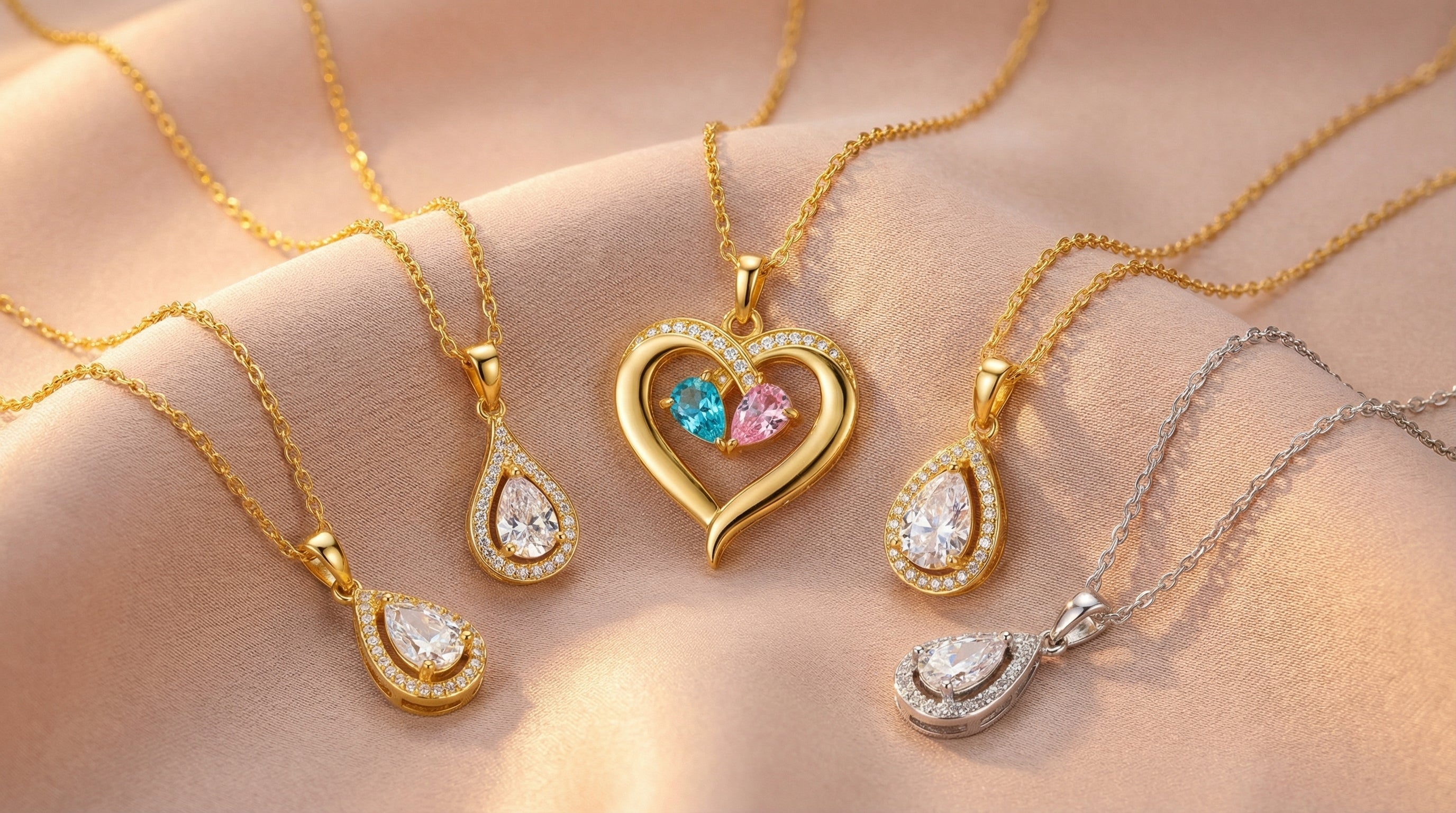
A 22-inch chain is arguably at its best as a foundation rather than a solo act. The proportion rule that matters most: the chain should not compete with the pendant. If the pendant is the statement — a moissanite solitaire, a cross, a signature shape — keep the chain in the 2–3mm band and choose a plain link like box or wheat so the eye lands on the stone. If the chain is the statement, wear it bare.
Moissanite is worth understanding here if you are choosing a pendant to hang from gold. It is a lab-grown gemstone that sits around 9.25 on the Mohs hardness scale — just below diamond, and comfortably hard enough for a pendant worn daily. Its refractive index is higher than diamond's, which is why the sparkle reads as more fiery and dispersive; that is a distinct aesthetic rather than a copy of a diamond. Because it is grown rather than mined, larger stones and bolder shapes become viable at a scale that would be difficult in diamond, which suits men's pendant designs well. The warm tone of 14k yellow gold also provides strong contrast against a bright white stone.
One structural note: check that the pendant's bail is wide enough to pass over your chosen chain width before you buy both. A 4mm Cuban link will not thread through a bail designed for a 2mm cable. If you would rather buy a finished pendant necklace than assemble the pair yourself, the necklaces collection includes pieces such as The Callisto Column Opal Necklace where chain and pendant are already matched.
Frequently asked questions
Is 22 inches too long for a men's chain?
No — it is one of the four standard men's lengths and generally the most versatile. On an average frame it lands just below the collarbone, which works with crewnecks, open collars and layering. It only reads as long on notably slim or shorter-torso wearers, who may prefer 20 inches.
Does 14k gold tarnish?
Genuine 14k gold is highly tarnish-resistant. The alloy metals mean it is not chemically inert in the way pure gold is, but under normal wear you should expect fading of polish from micro-scratches long before any tarnish. Rapid discoloration on a chain sold as 14k is a reason to question what you actually received.
What does the 585 stamp mean?
It is the numeric equivalent of 14K: 585 parts per thousand pure gold, or 58.5 percent. You may see either mark, and sometimes both alongside a maker's mark.
Can I shower and sleep in a 14k gold chain?
Many people do, and 14k tolerates it better than higher-karat gold thanks to its harder alloy. The realistic costs are gradual dulling of the finish and accumulated stress on the clasp. If your routine involves the gym, contact sport, backpack straps or heavy manual work, a gold-tone stainless steel chain absorbs that abuse with far less financial risk.
How thick should my first 14k chain be?
Between 2 and 3mm is the safest starting point. It is visible without dominating, works with or without a pendant, and keeps the gram weight — and therefore the cost of a solid gold piece — sensible. You can always add a bolder width later once you know how you actually wear it.
Is a thinner solid gold chain better than a thicker plated one?
It depends entirely on what you value. Solid gold at a modest width gives you real metal content, repairability and long-term worth. A thicker gold-tone steel chain gives you visual scale and worry-free durability today. Both are legitimate; problems only arise when a buyer thinks they bought one and received the other.
The short version
Confirm the length with a string test, then spend your attention where it counts: the word "solid," the millimeter width, the gram weight, the hallmark, and the clasp. Decide whether this chain needs to survive your gym bag or grace your collar, because that single question usually answers the solid-gold-versus-gold-tone debate on its own. And if a pendant is in your future, hold the chain at 2–3mm in a plain link so the stone gets to do the talking.

Leave a comment
This site is protected by hCaptcha and the hCaptcha Privacy Policy and Terms of Service apply.